
When a Picture Says the Wrong Thousand Words.
The Montclair Juneteenth Menu Incident and What It Should Teach Every Organization

On the surface, it looked like a routine school lunch calendar — a colorful graphic circulated to Montclair, New Jersey families showing what their kids would be eating each day in June. But on one date, June 19th — Juneteenth — someone had placed an image of a watermelon.
The fallout was immediate and national.
What Happened?
Sodexo, the large food service corporation that took over cafeteria operations across all Montclair Public Schools in January 2026, distributed a June lunch menu that featured a watermelon graphic on the date of Juneteenth. The image, according to the school district, was noticed by a resident who brought it to the district’s attention.
Montclair Superintendent Ruth Turner did not mince words. In a message to the school community, she called the image “inappropriate, insensitive, and inconsistent with the values of Montclair Public Schools,” adding that its appearance on Juneteenth — a federal holiday commemorating the emancipation of enslaved people in the United States and celebrating Black freedom, resilience, and achievement — was “offensive and unacceptable.”
Sodexo was ordered to remove the image and issue a revised menu immediately. The company complied and issued a public apology, stating: “We take this situation very seriously, and we deeply regret the usage of culturally insensitive imagery on our June menu. The trust placed in us by the Montclair Public Schools community — students, families, faculty and staff — is of utmost importance to us.”
The district also announced it would work with Sodexo to review internal procedures governing all materials shared with students and families.
Was It Intentional? The Question Everyone Is Asking
This is the question that lingers, and it is the right one to ask. Sodexo’s explanation was that they intended to “highlight a seasonal item that has been served regularly.” In other words — it’s summer, watermelon is on the menu, someone dropped in a watermelon graphic, and nobody stopped to think about what date was sitting right next to it.
Intentional? Most likely not. Careless? Absolutely. And in matters of racial sensitivity, carelessness is its own form of failure.
The watermelon has a well-documented and painful history in the United States as a racial stereotype used to demean and marginalize Black Americans — a stereotype rooted in the post-Civil War era that was weaponized to mock and dehumanize formerly enslaved people. Placing that image, even incidentally, on the very holiday that commemorates the end of slavery is not a neutral act, regardless of the person’s intent when they clicked “insert image.”
This incident mirrors a nearly identical situation from 2023 at Nyack Middle School in New York, where food-service vendor Aramark served fried chicken, waffles, and watermelon on the first day of Black History Month. That vendor also characterized the food choices as unintentional. Same explanation. Same damage. A full three years later, a major food service corporation made the same mistake — which raises a louder question: why hasn’t the industry learned?
This Is a Sodexo Problem — But It’s Also Every Organization’s Problem
Sodexo is a company that promises “culturally responsive menu options.” It has partnered with Magic Johnson through SodexoMagic, a food services management brand specifically focused on HBCUs and communities of color. And yet, somewhere in the chain — between the graphic designer, the menu approver, the regional manager, the contract coordinator — not a single person raised a hand and said: “Wait. Does anyone see what’s on this date?”
That is not a malicious failure. It is a systemic one. And systemic failures are actually harder to fix than individual bad actors, because they hide behind process.
The questions organizations need to ask themselves right now are:
1. Do your employees know the cultural weight of the holidays on the calendar? Juneteenth became a federal holiday in 2021. It has been formally recognized for five years. And yet, there are still employees in corporate America — across industries — who cannot explain what it commemorates, why it matters, or what symbols carry painful racial histories connected to it. That is a training gap that leadership must own.
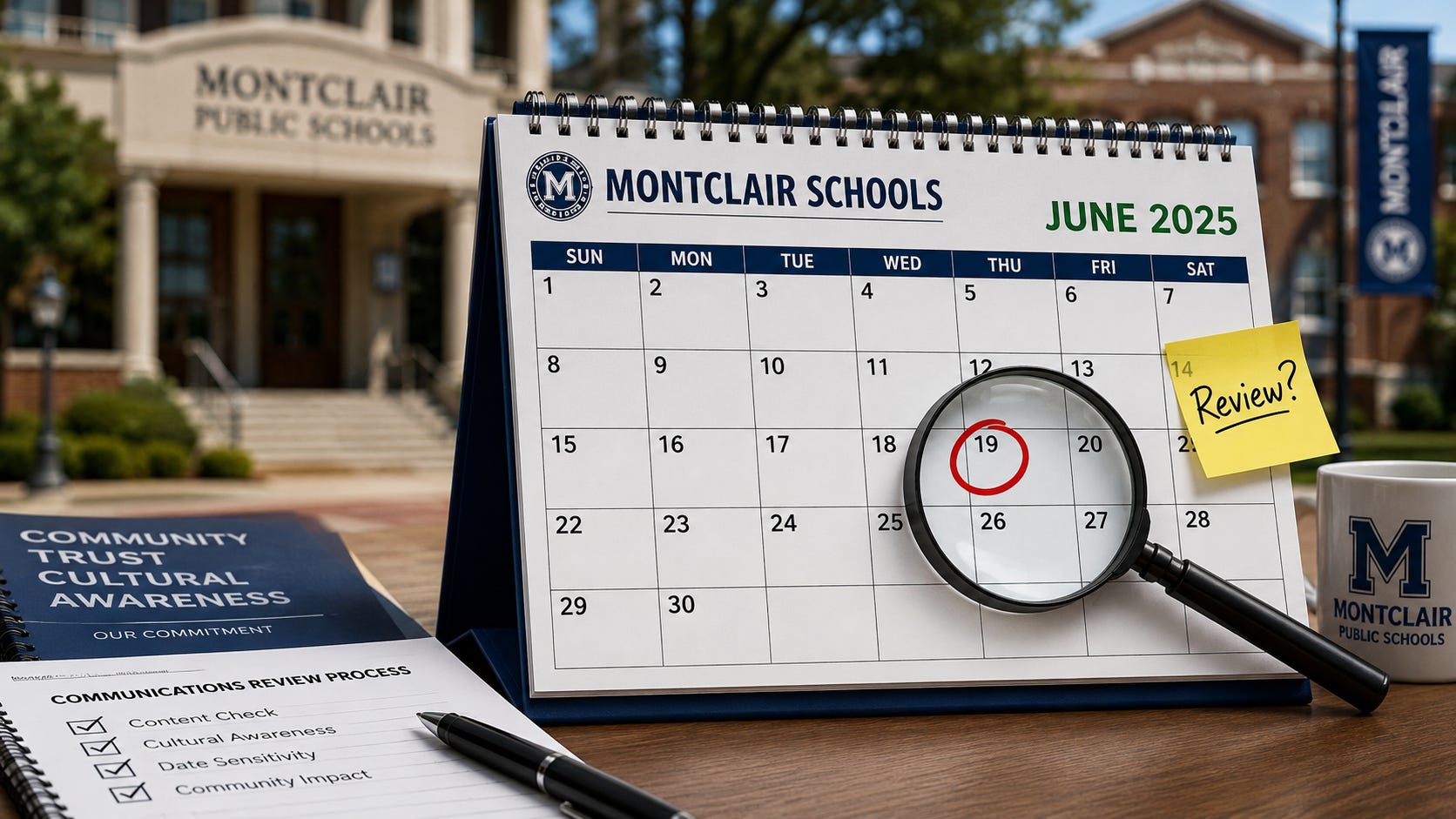
2. Is there any review process for culturally sensitive dates? When you publish something publicly — a menu, a flyer, a newsletter, a social media post — is there a checkpoint that asks: “What is the significance of the dates and imagery we are using?” For Sodexo, the answer appears to have been no. The Montclair district has now announced it will implement exactly that kind of review. The lesson for every organization is: don’t wait for a headline to build that process.
3. Who has the permission to speak up? Some of these incidents happen not because nobody knows better, but because the person who does know better doesn’t feel empowered to pause the workflow and say something. Psychological safety — the ability to raise a concern without fear of being dismissed — is a critical piece of preventing moments like this.
The Last Thing You Want Is to Make Headlines for the Wrong Reasons
Sodexo is now in the news. Not for the quality of their school lunches, not for expanding their services, not for a positive community initiative. They are in the news because a watermelon ended up next to Juneteenth on a calendar, and now parents, school officials, and national media are talking about racial insensitivity in New Jersey school cafeterias.
The reputational damage is real. Sodexo had been in the Montclair schools for barely five months when this happened. The district had promised families that Sodexo would deliver “culturally responsive menu options.” That promise now feels hollow to many in the community, and trust — especially trust built with communities of color — is extraordinarily difficult to rebuild once broken.
This is the moment to be proactive, not reactive. Every organization — whether you are a food service vendor, a hospital, a retailer, a school district, or a corporate office — should use this as a prompt to take stock.
Ask your team: Do we have a cultural calendar? Do we know the significance of Juneteenth, Indigenous Peoples’ Day, Diwali, Eid, Lunar New Year, and other observances that matter to the communities we serve? Are we making decisions — in marketing, in operations, in communications — that could intersect with those dates in ways we haven’t considered?
This is not about walking on eggshells. It is about being informed. A well-informed organization doesn’t accidentally put a watermelon on Juneteenth. A well-informed team doesn’t unknowingly echo a painful stereotype while trying to plan a seasonal lunch menu.
The Silver Lining: A Learning Moment
To Superintendent Turner’s credit, her response modeled exactly what organizations should do when this happens. She acknowledged the harm directly and without hedging. She acted swiftly — the image was removed immediately. She communicated transparently with her community. And crucially, she didn’t stop at the apology — she announced structural changes, committing to a review of internal procedures with Sodexo so that every future communication is filtered through “a lens of cultural awareness, sensitivity, and respect.”
That last part is the most important. An apology without a process change is just a press release.
For any organization reading this: take the lesson before you need to take the hit. Schedule a cultural competency training. Build a review checkpoint into your communications process. Empower your employees to raise a flag when something doesn’t feel right. Acknowledge that well-meaning people can still cause real harm through ignorance — and that the answer to ignorance is education, not shame.
The Montclair incident will likely be forgotten by the news cycle within days. But the families who were hurt will remember it far longer. And the next time an organization makes this kind of mistake — and there will be a next time, if they don’t act — the forgetting will take even less time, because the pattern will have grown familiar.
That’s a future we can avoid. All it takes is the willingness to learn before the headlines arrive.
A thoughtful organization doesn’t wait for a controversy to discover its gaps. It builds the culture, the training, and the review processes that prevent the controversy in the first place.
