

There’s a number from this week’s episode of Let’s Talk About Ethics that I haven’t been able to shake: 93% of Fortune 500 chief HR officers say they use AI in their hiring process. Only a third of their own employees know it.
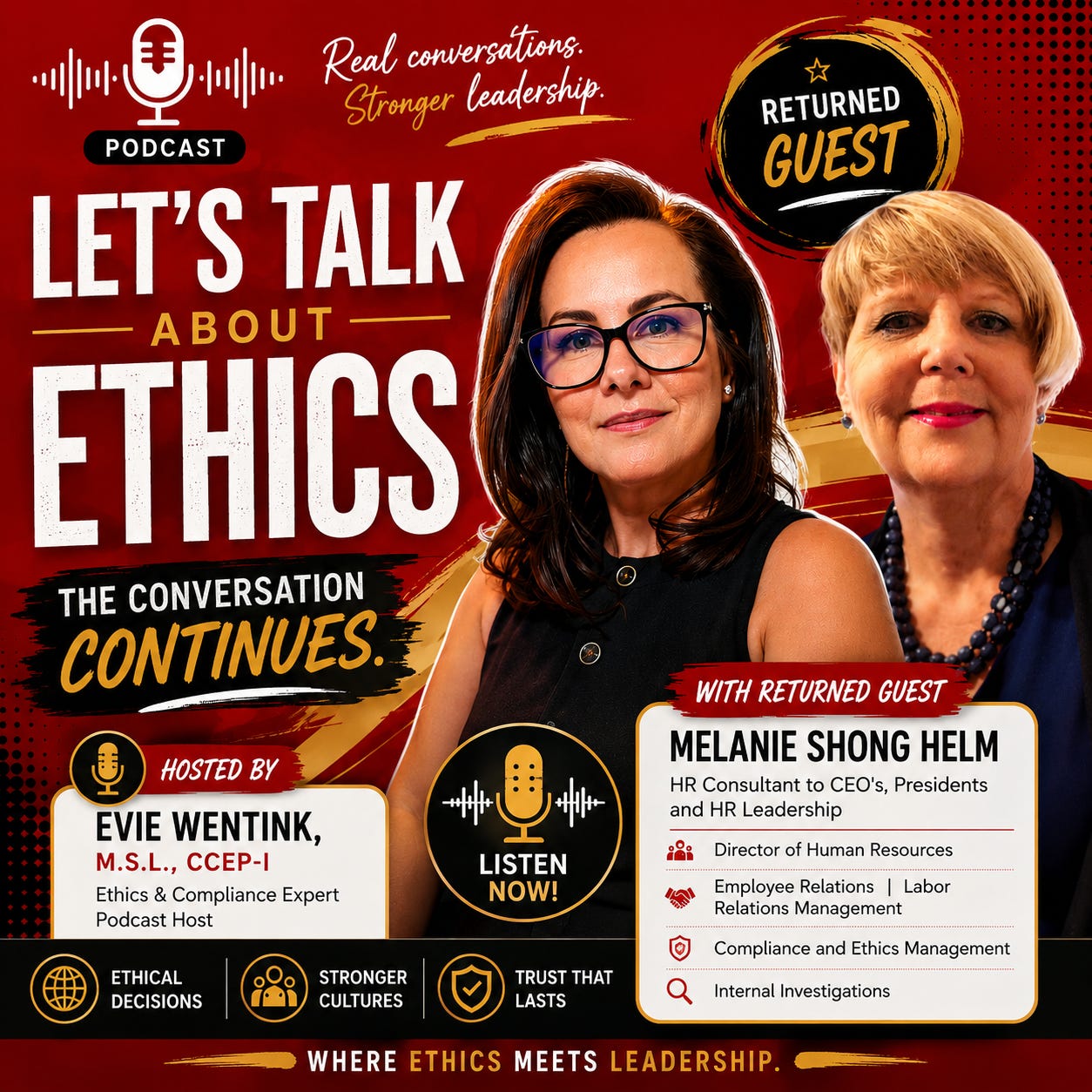
That gap — between what leadership knows and what the workforce knows — is really the whole episode in miniature. I sat down again with returning guest Melanie Shong Helm, an HR expert who has spent years building and overseeing applicant tracking systems (ATS), to talk about what’s actually happening inside the hiring tools companies have adopted over the last several years. The short version: a lot more than most people realize, and a lot less oversight than anyone should be comfortable with.
Nobody asked the AI company any questions
Melanie’s first point landed hard for me. Companies bought these applicant tracking systems and, in most cases, never asked the vendor basic due-diligence questions about how the sorting algorithm actually works. Not “what keywords are you filtering on,” not “whose values shaped this model,” not even “what happens to the applicants we never see.”
That last part matters more than it sounds. If nobody asks, nobody knows whether the system reflects the company’s own values — or somebody else’s entirely.
Bias creeps in sideways, not head-on
Here’s the part that stuck with me. Melanie walked through a simple, almost mundane scenario: a 25-year-old hiring manager writes a job description using the language that’s natural to him — his school, his generation’s phrasing, his frame of reference. The algorithm learns those patterns. Over time, it starts favoring resumes that sound like him — maybe even his alma mater — without anyone deciding that should happen.
Now multiply that by every recruiter, every regional dialect, every non-native English speaker, every generational difference in how people describe their own work. None of that is intentional discrimination. It’s just... drift. And drift, left unchecked, becomes a pattern that looks a lot like bias because, functionally, it is.
The “quick apply” trap
One of the more practical revelations: applying through LinkedIn’s “quick apply” or similar one-click tools often doesn’t count you as an official applicant. Legally, if a company has 50+ employees, every applicant has to be captured for EEO-1 reporting — but quick-apply submissions frequently never make it into that official count unless a candidate is later redirected to apply through the company’s actual career site.
Melanie’s advice: always apply directly on the employer’s career page. It’s the only way you’re guaranteed to actually be counted.
When the law firm cited 40 cases that didn’t exist
We talked about the now-infamous story of a major law firm submitting legal filings with roughly 40 citations to cases that simply don’t exist — clearly the product of unchecked AI use. It’s an extreme example, but it crystallizes the core message of the whole conversation: AI without human review isn’t a shortcut, it’s a liability. Whether it’s legal filings or resume screening, the technology can move fast and be confidently wrong, and only a human in the loop catches it.
What actually works
Melanie didn’t just diagnose the problem — she gave real, usable fixes:
Knockout questions, written carefully. Simple yes/no questions tied directly to genuine job requirements (right to work in the U.S., required certifications) can responsibly narrow a flood of applicants without relying on opaque algorithmic filtering.
Behavioral-based interview questions, asked consistently. The same handful of job-specific, behavior-based questions for every candidate — no variation — keeps the process fair and comparable.
Actual human review of every application. Not glamorous, not always realistic with massive applicant pools, but it remains the most reliable safeguard against algorithmic blind spots.
Treat candidates like people, because they are. Camera on, real engagement during interviews, a phone call (not just a form rejection email) for finalists who don’t get the offer. Melanie’s reasoning: even a rejected candidate is still a potential customer, and how a company handles “no” says as much about its values as how it handles “yes.”
The bigger picture
Underneath all of it is a governance problem. AI usually enters a company through IT, driven by efficiency and cost savings — not through an ethics committee weighing values, fairness, and legal exposure. Until companies treat AI governance as seriously as they treat financial controls, the tools meant to make hiring more efficient will keep quietly making decisions nobody signed off on.
As Melanie put it: compliance and HR aren’t supposed to be in separate worlds. They’re partners. And right now, hiring may be the clearest example of why that partnership can’t wait.
This is a recap of this week’s episode of Let’s Talk About Ethics with returning guest Melanie Shong Helm. Part two — on how compliance teams can shape hiring communications and culture — is coming soon.


